
Review: Sadie Sink Shines in Robert Icke’s Romeo & Juliet
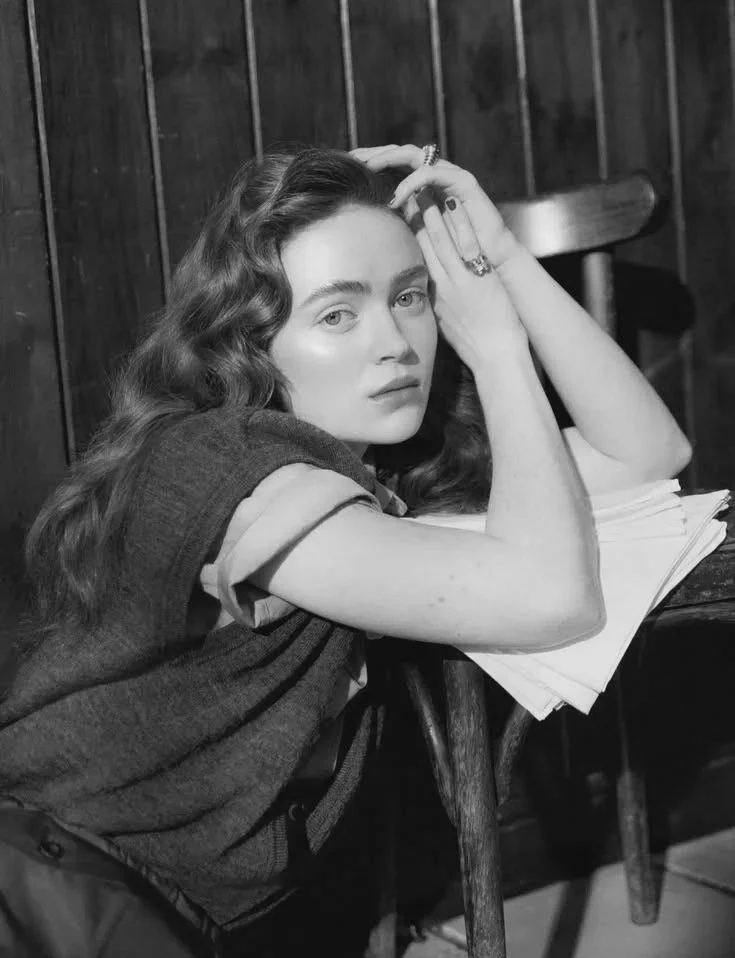
Photo Courtesy of Pinterest
This review contains spoilers.
Robert Icke’s production of Romeo & Juliet, which opened this March, contains questionable directorial choices but is victorious in its focus on Juliet’s confinement. The popular Romeo and Juliet follows Romeo Montague and Juliet Capulet, two young lovers who come from opposing families. The division between their houses strips the characters of their youthful naïveté, and a twisted turn of events leads to their double suicide.
The play, which stars Sadie Sink and Noah Jupe, features a large clock that shows the date and time of each scene. The clock emphasizes the quick pace of Romeo and Juliet’s love story and that their time is running out. While it contributes to the play thematically, the clock also acts as an aid for the audience to keep track of the story; this is helpful but reveals the production’s tendency to over-explain itself. For example, the play reenacts many scenes twice: once in an alternate reality in which Romeo and Juliet survive, and once in alignment with the play’s plot. The purpose of these dual scenes is to highlight the fragility of Romeo and Juliet’s story and how, if small changes were made, they would have lived longer lives. These scenes fell flat and were unnecessary, however; it is obvious that changing one’s past will alter the future, and it feels like the play is simply explaining the Butterfly Effect to the audience.
Sink’s powerhouse performance makes up for the play’s helpful-yet-patronizing directorial choices, further proving that she belongs in the theatre. The play’s strongest directorial choice is keeping Sink on stage as much as possible. By having parallel scenes play out on stage at once, the production contrasts Romeo’s liberation with Juliet’s confinement; while Romeo takes to the streets with his friends, Juliet remains in her bedroom, desperate for the taste of freedom that Romeo can bring her. Despite her quarantined lifestyle, Sink’s Juliet is stronger, fiercer, and more intelligent than in many other adaptations.

Photo Courtesy of Pinterest
The play opens with a dreamlike sequence of Juliet being haunted by the Montagues and Capulets fighting. It ends with another haunting scene for Juliet: this time, she is haunted by her past self, her future self, her future child, and a future Romeo. Before deciding to end her life, Juliet is confronted with her past and everything that she could have been if only the fighting had stopped. This final scene reminds the audience that Juliet has no control in her divided world, and she is forced to give up her future just to end the pain. This moment, which is set to “not a lot, just forever” by Adrianne Lenker, left a large part of the young audience in tears. No matter how many directorial mistakes were made in the production, the play succeeds in touching its target audience and bringing the relevant tragedy of this Shakespearean work to Gen Z theatregoers.